
Real Estate Investment Guide – Smart Property Investment Tips for Beginners
Meta Description: Learn how to invest in real estate with this complete investment guide. Discover the best property types, investment strategies, legal checks, risks, and expert tips for maximizing returns.
Real estate has long been considered one of the safest and most rewarding investment options.
Whether you're a first-time investor or someone looking to expand your portfolio, investing in property can generate long-term wealth, passive income, and financial security.
However, successful real estate investment requires more than simply purchasing a property.
Investors must understand market trends, location advantages, legal documentation, financing options, and future growth potential before making a decision.
This comprehensive Real Estate Investment Guide will help you understand every important aspect of property investment and make smarter investment decisions.

Why Invest in Real Estate?
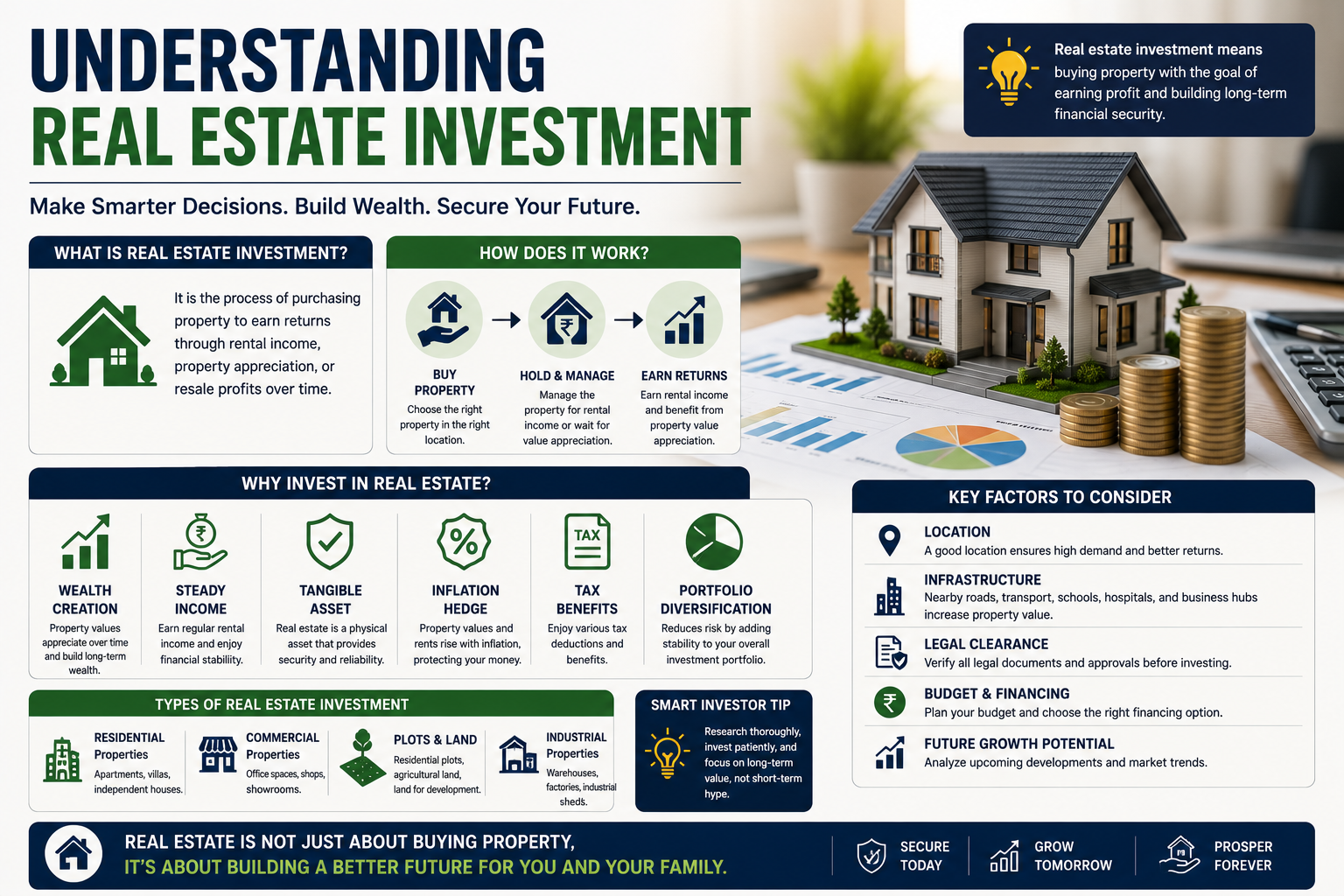
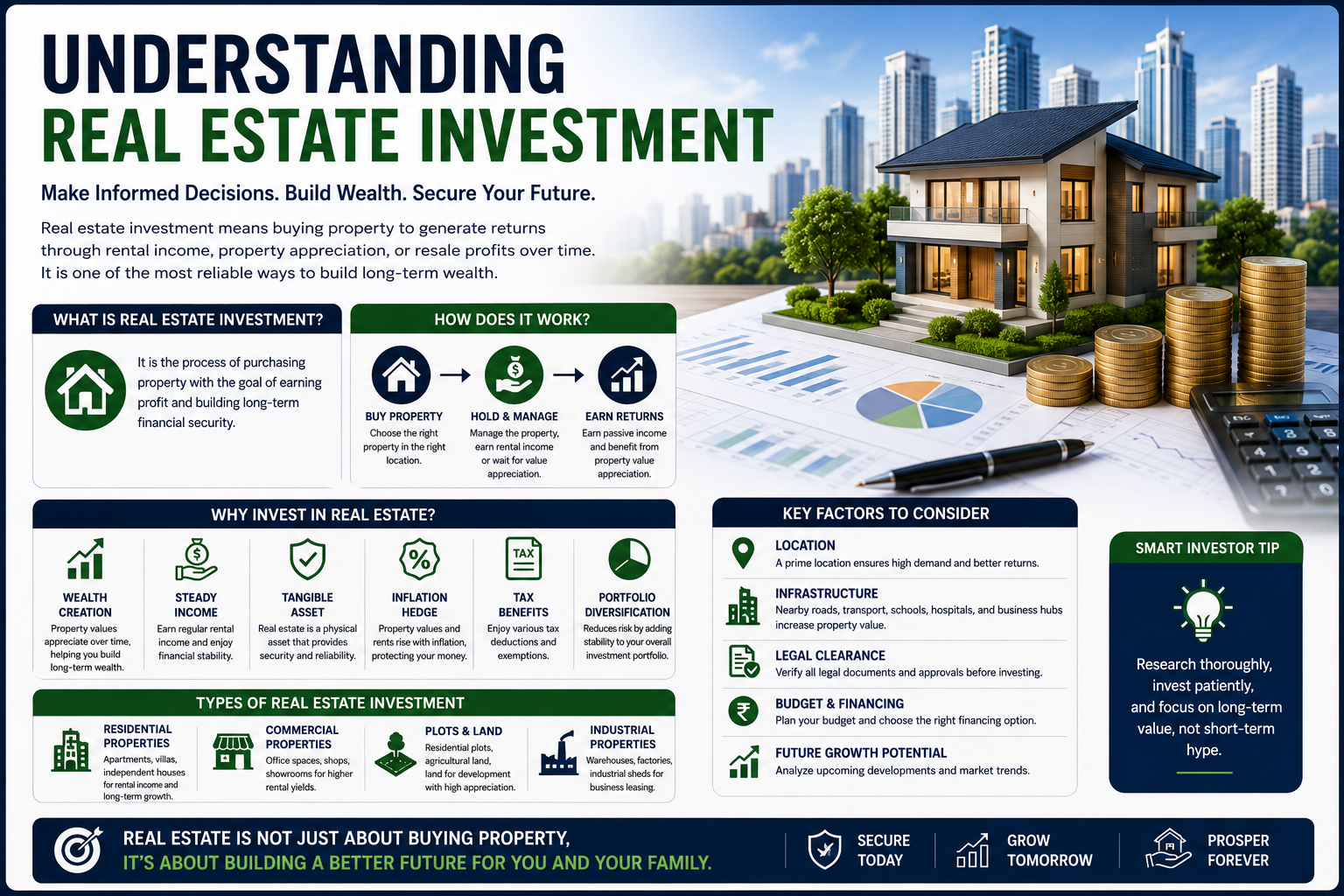
Real estate offers several advantages over many other investment options.Some of the biggest benefits include:
✅Long-term wealth creation
✅Steady rental income
✅Protection against inflation
✅Tangible physical asset
✅Portfolio diversification
✅Tax benefits
✅High appreciation potential
Unlike stocks that may fluctuate daily, quality real estate generally grows steadily over time.

Understanding Real Estate Investment
Real estate investment simply means purchasing property with the goal of earning profits through:
✅Rental income
✅Capital appreciation
✅Property resale
✅Commercial leasing
✅Land development
Your investment strategy depends on your financial goals and investment timeline.
Some of the biggest benefits include:Long-term wealth creationSteady rental incomeProtection against inflationTangible physical assetPortfolio diversificationTax benefitsHigh appreciation potentialUnlike stocks that may fluctuate daily, quality real estate generally grows steadily over time.
Understanding Real Estate InvestmentReal estate investment simply means purchasing property with the goal of earning profits through:
Rental income
Capital appreciation
Property resale
Commercial leasing
Land development
Your investment strategy depends on your financial goals and investment timeline.
Types of Real Estate Investments
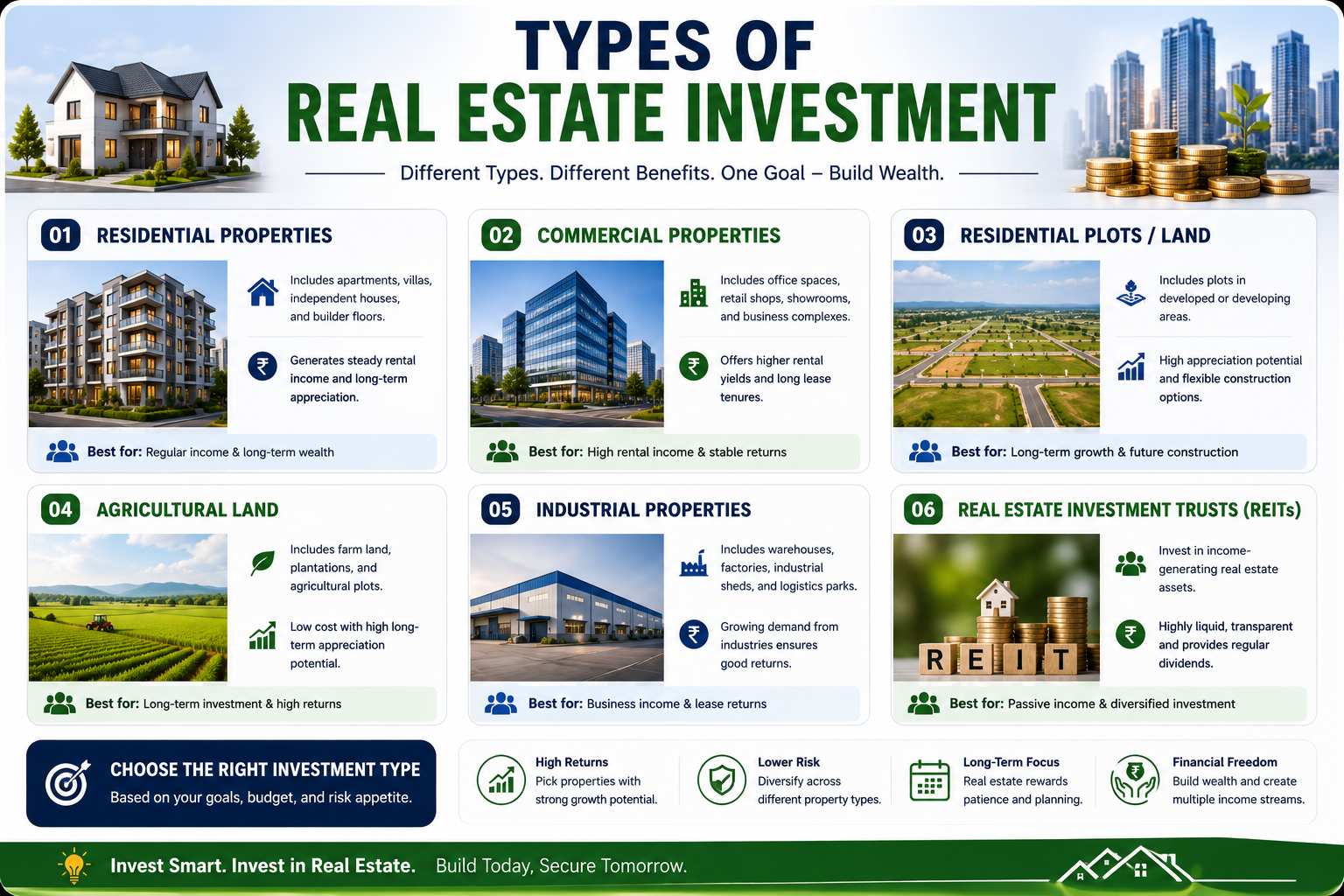
Residential properties
include:
→Apartments
→Villas
→Independent houses
→Builder floors
These properties generate rental income while appreciating in value over time.Commercial Property
→Commercial investments include:
→Office spaces
→Retail shops
→Showrooms
→Warehouses
Commercial properties usually provide higher rental yields but require larger investments.Residential PlotsBuying plots in developing areas is one of the most popular investment strategies.Benefits include:Lower maintenanceBetter appreciationFlexible construction timelineLower depreciationAgricultural LandAgricultural land can offer excellent long-term appreciation, depending on local regulations and development plans.
Always verify ownership and legal permissions before investing.
Step 1: Define Your Investment Goal
Step 1: Define Your Investment Goal
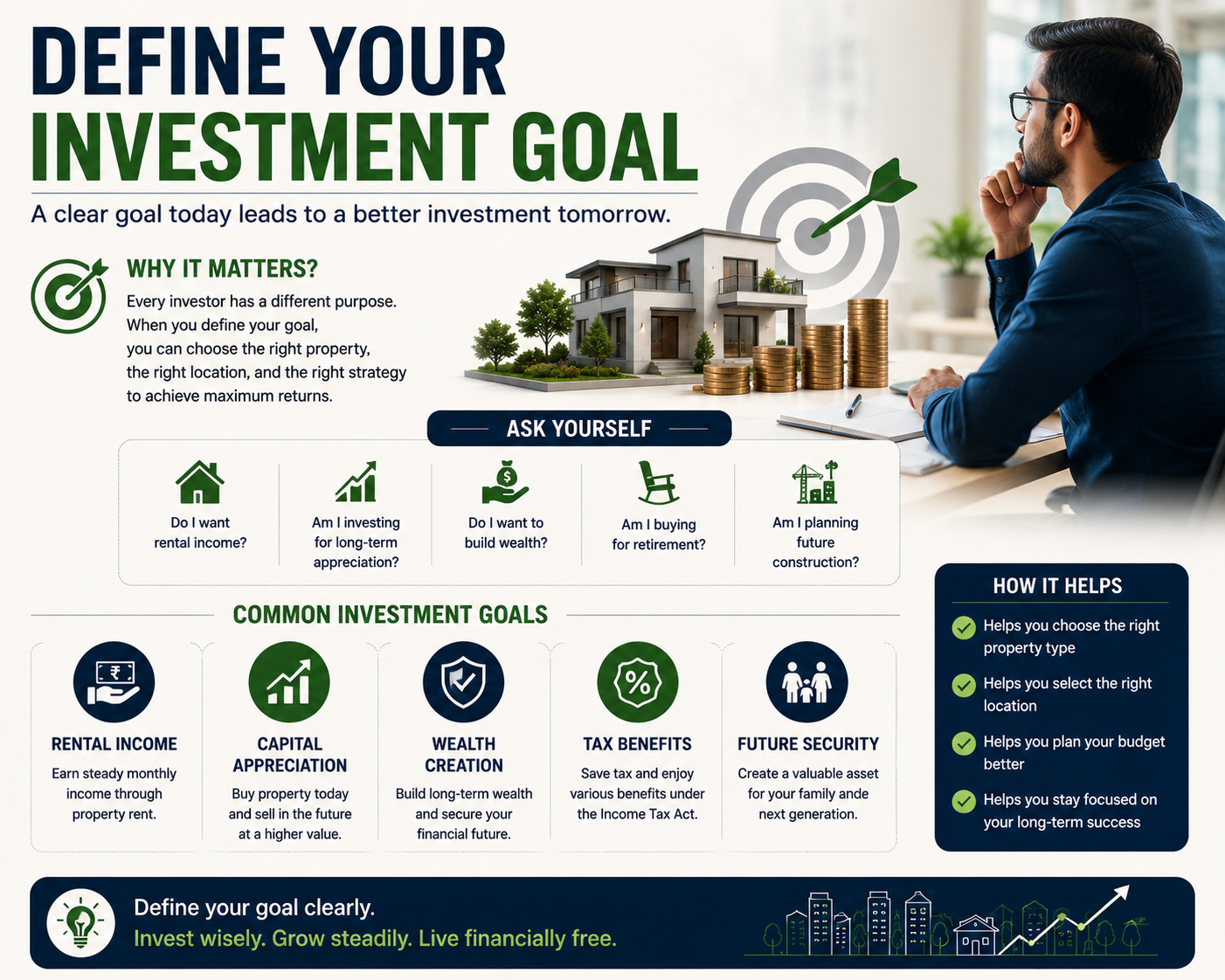
Every investor has different objectives.
Ask yourself:
❃Do I want rental income?
❃Am I investing for long-term appreciation?
❃Do I want to build wealth?
❃Am I buying for retirement?
❃Am I planning future construction?
Your investment goal determines which property is right for you.
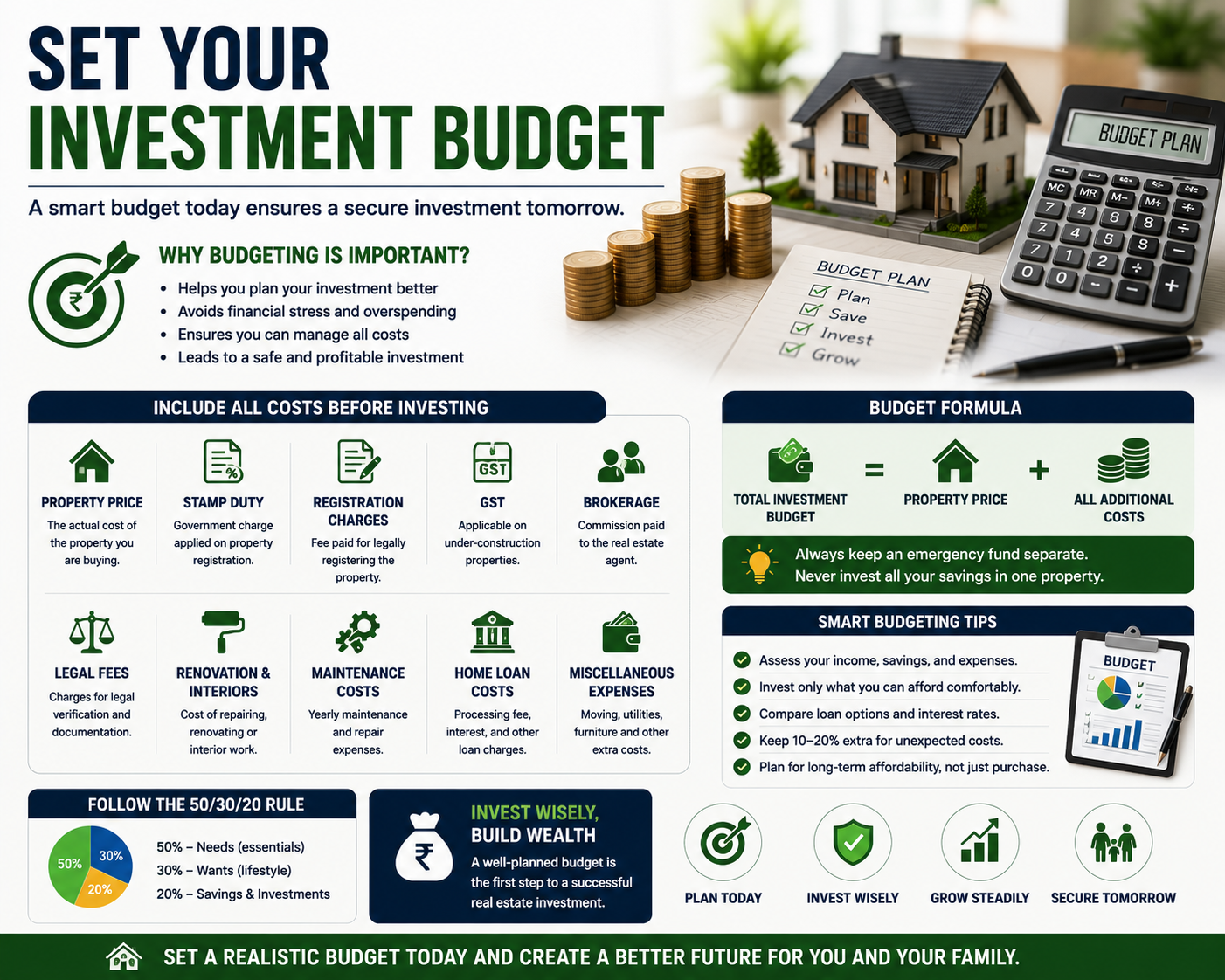
Step 2: Set Your Investment Budget
Before searching for properties,
calculate your complete investment budget.
Include:
✱Property cost
✱Registration charges
✱Stamp duty
✱GST (if applicable)
✱Brokerage
✱Legal fees
✱Renovation costs
✱Maintenance expenses
Home loan processing feesNever invest all your savings in one property.
Step 3: Choose the Right Location
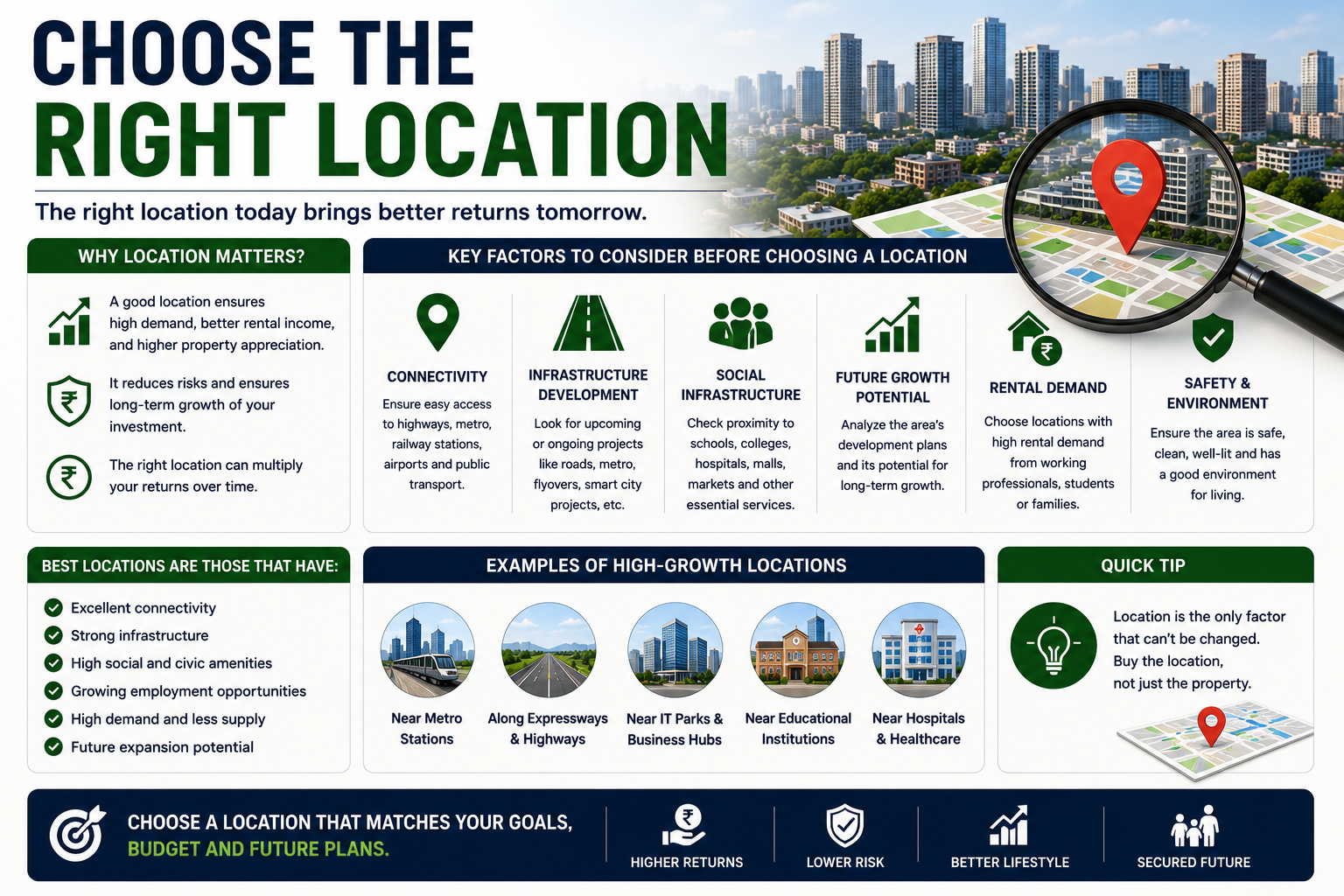
Location is the biggest factor influencing investment returns.Look for areas with:
Excellent Connectivity
Nearby:
𖥑Metro stations
𖥑Expressways
𖥑Railway stations
𖥑AirportsPublic transport
𖥑Growing Infrastructure
Choose locations where government infrastructure projects are underway.
Examples include:New highways
𖥑Metro expansion
𖥑IT parks
𖥑Industrial corridors
𖥑Smart city projects
Infrastructure growth often leads to higher property appreciation.
Strong Rental DemandIf you're buying for rental income, choose locations near:
𖥑IT companies
𖥑Universities
𖥑Hospitals
𖥑Business hubs
𖥑Industrial zones
Higher rental demand means better cash flow.
Step 4: Research the Market
Study local real estate trends before investing.
Analyze:
↳Current property prices
↳Historical appreciation
↳Rental yields
↳Upcoming projects
↳Supply and demand
↳Future infrastructure
\Avoid investing only because prices appear low.

Step 5: Verify the Builder or Developer
For under-construction projects, builder reputation matters.
Check:
➤Previous projects
➤Customer reviews
➤Construction quality
➤Delivery timeline
➤Financial stability
➤RERA registration
A trusted builder reduces investment risk.

Step 6: Verify Legal Documents
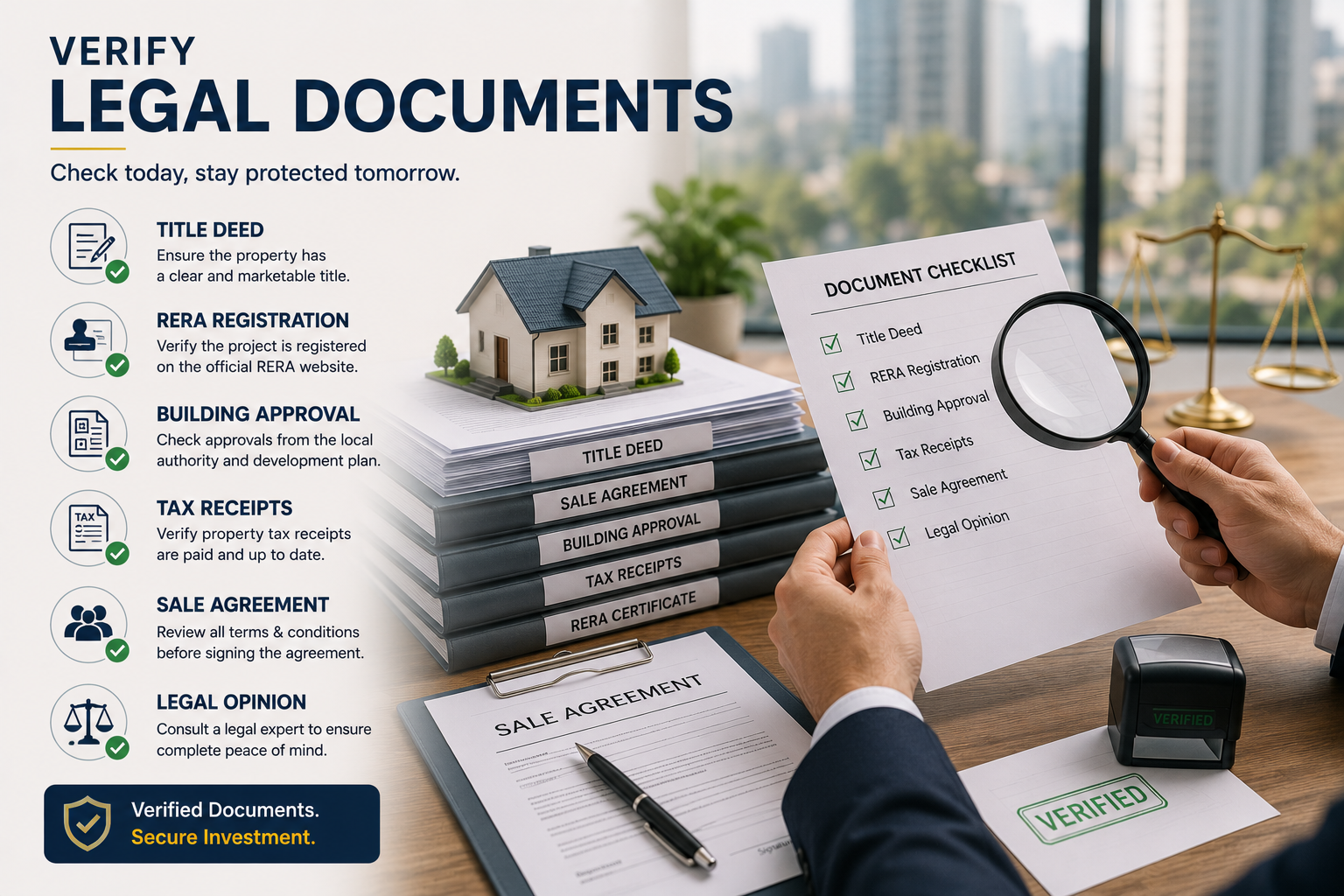
Always verify every property document.Important documents include:
➤Title Deed
➤Sale Deed
➤Encumbrance Certificate
➤Building Approval
➤Completion Certificate
➤Occupancy Certificate
➤Property Tax Receipts
➤RERA Registration
Legal verification protects your investment.
Step 7: Calculate Expected Returns
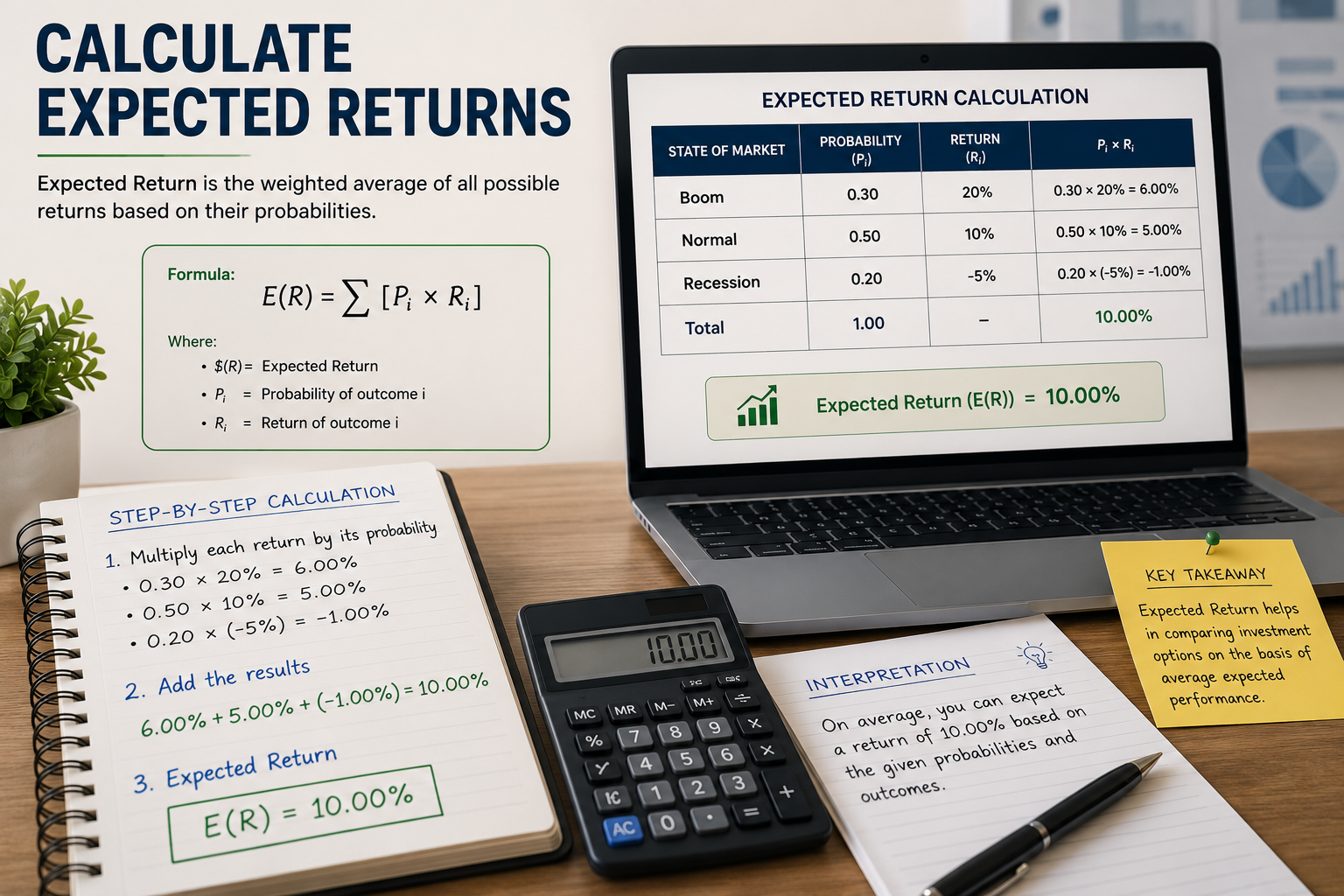
Never buy property without estimating future returns.Calculate:
*Rental Yield
*Rental Yield = Annual Rent ÷ Property Price × 100
Higher rental yield improves monthly income.
Capital Appreciation
Estimate how much property prices may increase over the next:
*5 years
*10 years
*15 years
Historical price growth can help estimate future appreciation.
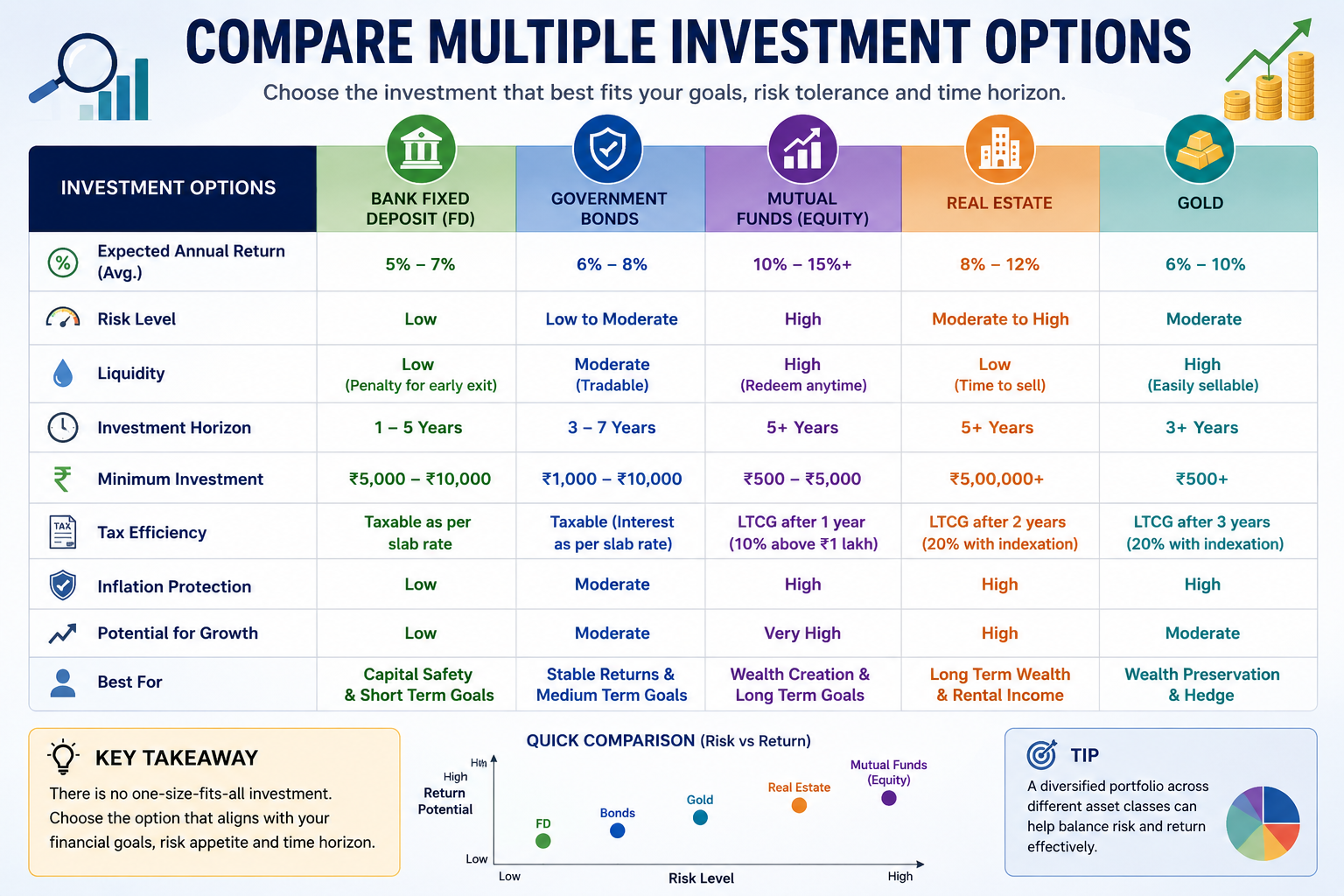
Step 8: Compare Multiple Investment Options
Never purchase the first property you visit.
Compare:Feature Property
✳A Property
✳B Price, Location, Rental Demand,
✳Future Growth Builder Legal Status
Comparing options improves investment decisions.
Step 9: Understand Financing Options
Many investors use home loans.Compare:
✤Interest rates
✤EMI
✤Processing charges
✤Loan tenure
✤Prepayment options
Choose financing that fits your financial plan.
Step 10: Diversify Your Investments
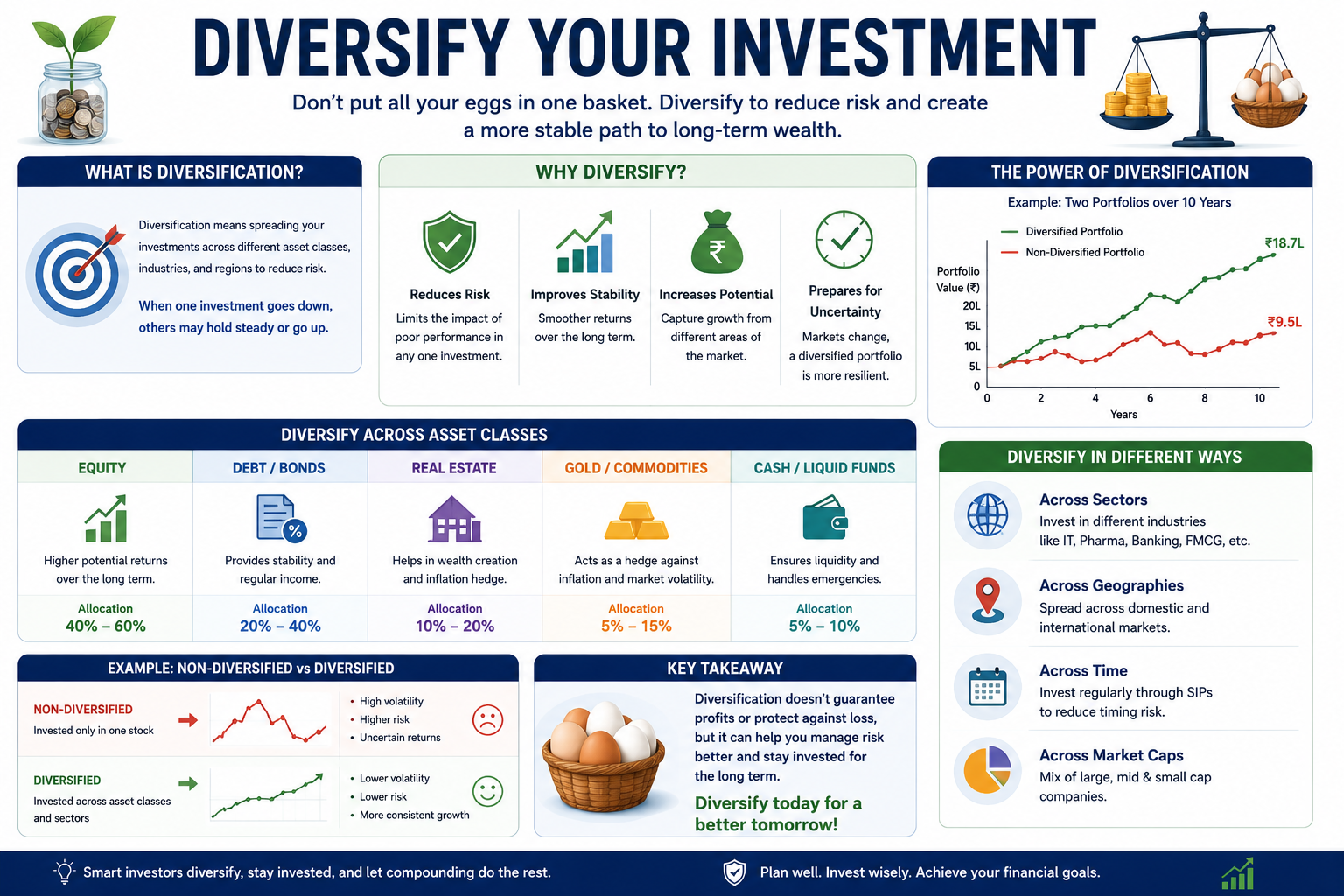
Common Real Estate Investment Mistakes ➽
Avoid these common mistakes:
Buying without research
Ignoring legal documents
Choosing poor locations Overpaying
Taking unaffordable loans
Ignoring hidden costs
Trusting verbal promises Skipping market research
Tips for First-Time InvestorsIf you're investing for the first time:
Start with Affordable Properties
Avoid excessive financial pressure.Focus on Growth Areas
Emerging locations often provide better returns.
Think Long-Term Real estate performs best over long investment periods.Verify Every DocumentLegal verification is non-negotiable.Consult ProfessionalsSeek advice from experienced real estate consultants and legal experts before investing.
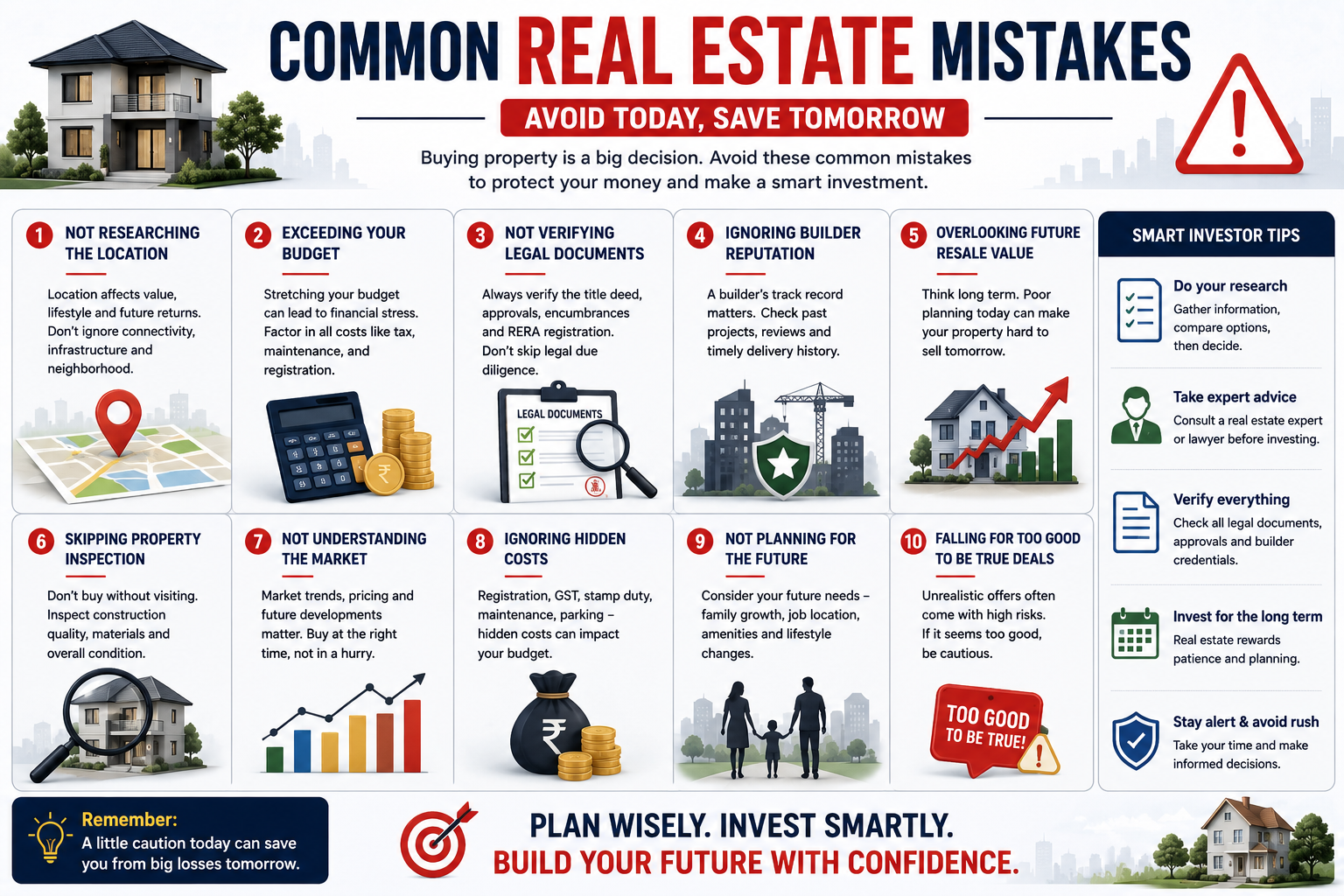
Benefits of Long-Term Real Estate Investment
Long-term investors enjoy several advantages.Wealth CreationProperty values generally increase over time.Passive Income
Rental income creates a steady monthly cash flow.Financial Stability
Real estate offers stability compared to many volatile investments.Inflation Protection
Property prices and rental income often rise with inflation.
Better Resale Value
Quality properties in good locations typically attract higher resale demand.
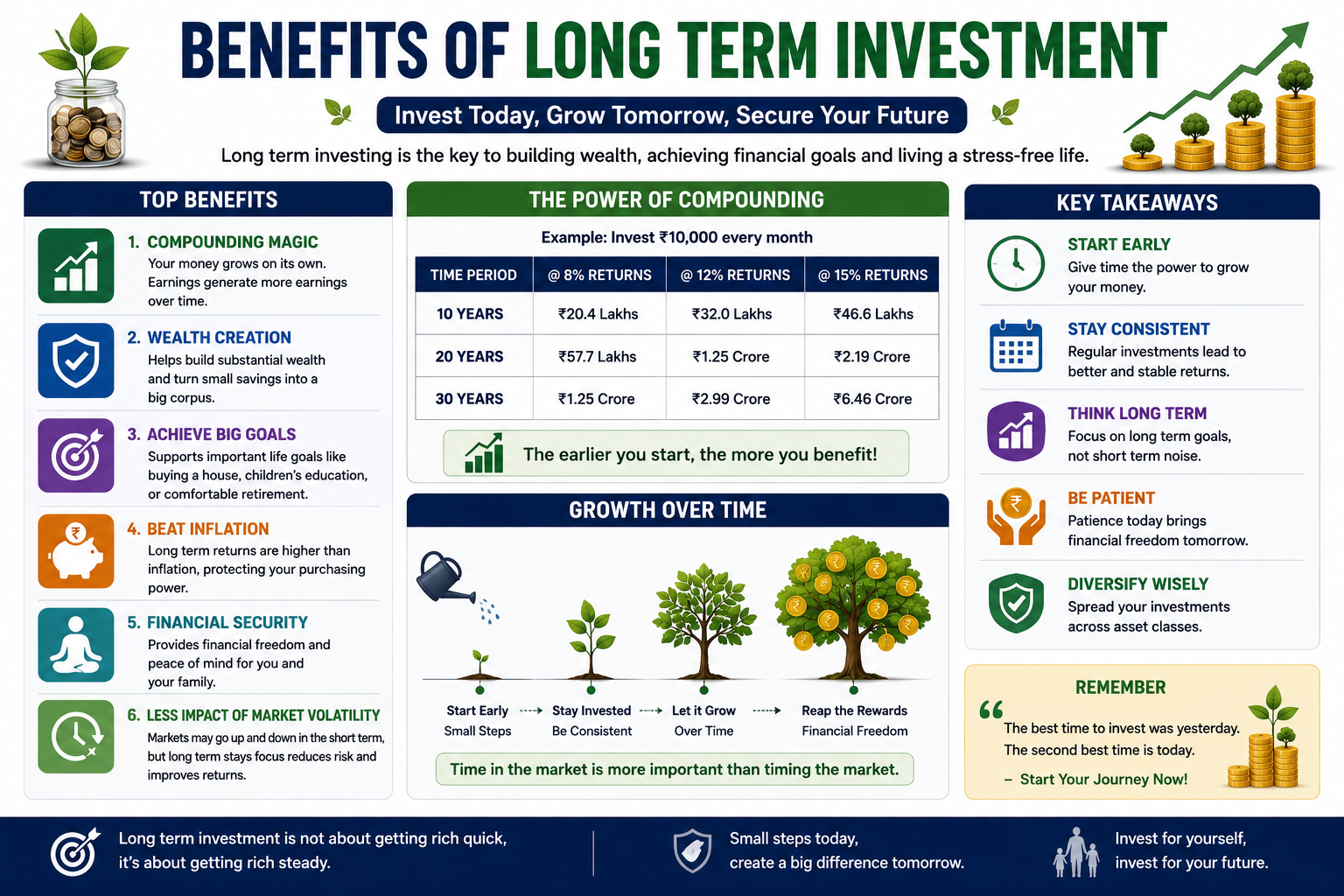
Real Estate Investment Checklist
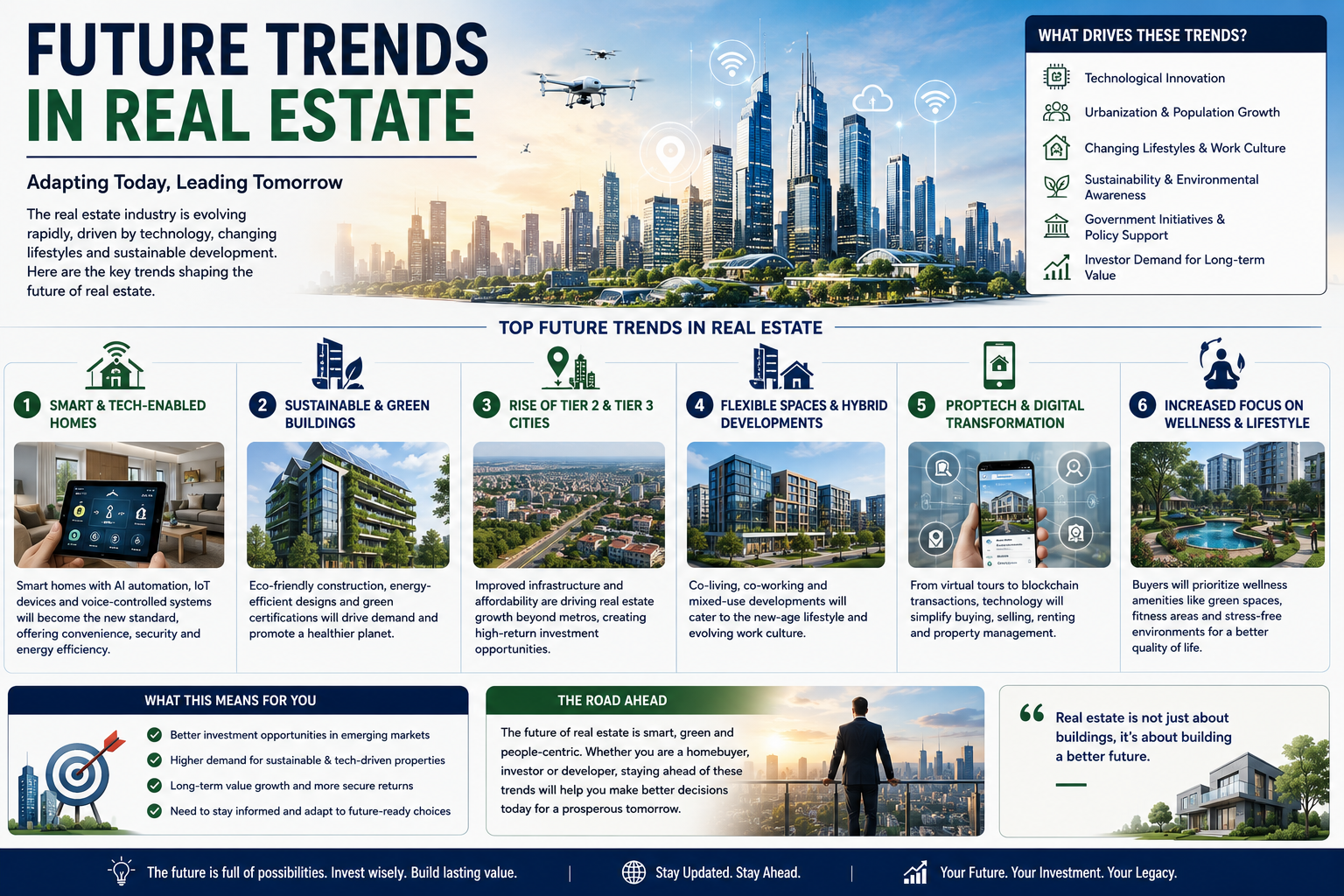
Future Trends in Indian Real Estate
The Indian real estate market continues to evolve with:
Smart city developments
Green buildings
Digital property transactions
Affordable housing schemes
Co-working and mixed-use developments
Growing demand in Tier-2 and Tier-3 cities
Keeping an eye on these trends can help investors identify emerging opportunities before prices rise.
Is real estate a good investment in India?
Yes. Real estate remains one of the most reliable long-term investment options due to its potential for appreciation, rental income, and wealth creation.
Which type of property offers the best return?The best option depends on your goals.
Residential properties are ideal for stable rental income, while commercial properties may offer higher rental yields.
Residential plots in developing areas often provide strong long-term appreciation.How much money should I invest in real estate?
Invest only after considering your income, savings, emergency fund, and financial goals.
Avoid stretching your budget beyond what you can comfortably afford.What documents should I verify before investing?
Always verify the Title Deed, Sale Deed, RERA registration, Encumbrance Certificate, Building Approval, Property Tax Receipts, and other legal documents before making a purchase.